
How Much Should You Pay a Contractor Up Front in Canada?
A homeowner’s guide to renovation deposits, material payments, credit cards, progress billing, written contracts and safer ways to pay for construction work.
Read Article
How professional pricing, real project demand, local store access and connected trade workflows can make construction-material purchasing faster, more predictable and more intelligent.
Construction materials have traditionally been purchased in a fragmented, reactive way.
A painter finishes a walkthrough, discovers that another five gallons are required, drives across town, waits at a counter and hopes the correct product, sheen and quantity are available at a price that still protects the job’s margin. On one project, that inconvenience may appear minor. Across hundreds or thousands of projects, it becomes expensive: lost production hours, inconsistent purchasing, avoidable store trips, unpredictable material costs and very little visibility into what professionals actually need in the field.
MEINHAUS is proud to have commenced a new partnership with Dulux Paints designed to improve that experience for our member professionals.
The partnership begins with a practical benefit—meaningful professional pricing—but the opportunity is much larger. We see paint as an ideal starting point for a more intelligent form of construction e-commerce: one where real projects, real trade demand, local availability, professional purchasing behaviour and on-the-go decision-making begin to operate as one connected system.

Paint is required across an unusually wide range of residential and commercial work: whole-home repaints, rental turnovers, new construction, basements, kitchens, bathrooms, office refreshes, commercial maintenance, exterior painting and repair-driven touch-ups.
It is also highly time-sensitive. A professional may need a specific product, sheen, colour or quantity that day. The value of the purchasing experience therefore depends on more than having a digital catalogue.
The stronger model is one that understands the work being performed, recognizes what the professional is likely to need, knows where that product can be sourced, surfaces relevant pricing and makes the purchase easier at the moment it matters.
Dulux already provides a substantial professional ecosystem, including trade resources, professional programs, product information and digital ordering tools. Contractors can review the broader Dulux professional offering, explore the Dulux product catalogue, or access additional Dulux professional resources and tools.
The opportunity for MEINHAUS is to connect that supply-side capability more directly to the project workflow already taking place inside MEINHAUS Pro.
MEINHAUS Pro members who opt into the Dulux program can access exclusive in-store pricing through the partnership.
For the professional, the redemption process is intentionally simple. Once enrolled, the contractor can identify themselves at a participating Dulux location using the phone number or email associated with their MEINHAUS Pro account. The store team can locate the eligible account and apply the applicable pricing.
The MEINHAUS Pro dashboard and app are also being designed to make the field experience easier by surfacing nearby store information and navigation support directly within the professional workflow.
For current program details and direct access to the Dulux benefit, MEINHAUS Pros can visit https://www.meinhaus.ca/professional/dulux.
Professionals who have not yet joined the network can learn more at https://www.meinhaus.ca/pro. Existing Pros can access the dedicated Dulux partnership page at https://www.meinhaus.ca/professional/dulux, with additional platform access through https://www.meinhaus.ca/pro-app.
Most consumer e-commerce targeting is built around browsing behaviour: what someone viewed, searched for, added to a cart or purchased previously.
Construction provides a stronger class of signal.
The most valuable information is often the project itself.
A professional completing a full-home interior repaint has different needs from a painter finishing a basement, turning over a rental unit, completing trim and doors, repairing water-damaged drywall or preparing an exterior after siding repairs. The scope, property type, project size, location, timing and finish requirements all provide useful context before the material purchase happens.
That creates an important shift. Instead of asking only “What did this contractor buy last month?”, a connected construction platform can begin asking “What work is this contractor about to perform?”
As MEINHAUS develops its project and professional datasets, those signals can potentially support better purchasing decisions, including:
Consider a traditional advertising system. A painter searches for interior paint, visits several websites and begins receiving ads for paint. That system knows the contractor expressed interest.
A project platform can potentially know something far more useful: that a 2,000-square-foot interior repaint has been sold, the scope includes walls and trim, the project is scheduled in a particular market and a specific professional has been assigned.
That does not mean every piece of project information should become marketing data. Privacy, professional consent and responsible data governance have to remain central. But where appropriate permissions exist, project context can make procurement recommendations more relevant and materially less wasteful.
This connects to MEINHAUS’s broader work around proprietary construction intelligence. We have written about that direction in MEINHAUS: Proprietary AI for the Future of the Home: structured project data can improve estimating, scopes, professional procurement, material selection and eventually the persistent digital record of the property itself.
Construction has no shortage of data, but much of it arrives late.
Sales reports explain what was purchased. Distributor records explain what left a store. Accounting data explains what a company spent. Those datasets are valuable, but they often describe activity after the underlying construction decision has already happened.
A platform that participates earlier in the project lifecycle can observe demand closer to its origin: when work is being scoped, priced, awarded, scheduled and mobilized.
With appropriate privacy standards, aggregate patterns could help answer commercially important questions such as which services are accelerating in a market, where seasonal demand is beginning to shift, what project types are selling most frequently, which categories are likely to be required next and where professionals may need faster supply or technical support.
Paint is particularly well suited to this model because it combines high purchase frequency, short replenishment cycles, substantial product choice and immediate job-site consequences when the wrong material is selected or unavailable.

There is an important distinction between intelligent distribution and simply showing contractors more promotions.
A professional does not need another stream of irrelevant ads while trying to complete a project.
The useful version of this system is contextual.
If an upcoming scope is a rental turnover, the professional may care about durability, speed, repeatable colour selection and cost control. If it is a premium occupied-home repaint, washability, finish quality and low disruption may matter more. If the work is exterior, substrate compatibility, weather windows and product performance become central.
Official Dulux resources already organize products and professional tools around project requirements. The Dulux product catalogue includes interior, exterior, primer, specialty and other coating categories, while the Dulux professional portal provides tools and programs intended for professional users.
The MEINHAUS opportunity is to make the transition from project requirement to professional purchase increasingly seamless.
Professional pricing is not merely a perk.
Material economics affect whether a contractor can quote confidently, protect margin, maintain consistent products across jobs and avoid wasting labour on procurement.
For a small painting company, a difference in product cost can become significant across dozens of gallons. Add repeated store trips, waiting time, inconsistent buying and emergency purchasing, and procurement begins to affect labour productivity as well as material margin.
Volume purchasing programs help address the first problem. Better workflow integration can address the second.
The goal is to give MEINHAUS Pros greater purchasing power while also reducing the administrative burden surrounding that purchasing power.
Homeowners benefit when the professional performing the work has a more predictable supply chain.
More consistent material pricing can make estimating clearer. Better product access can reduce avoidable delays. More reliable procurement can help prevent last-minute substitutions. A well-supported professional can spend more time performing the work and less time solving supply problems between job sites.
MEINHAUS operates as the general contractor: we scope, price, sell and manage home-improvement projects while qualified subcontractors complete assigned work through the MEINHAUS Pro network.
That means we see both sides of the transaction.
The homeowner wants a clear scope, defined pricing, accountability and a professionally managed result. The trade professional needs a steady opportunity pipeline, understandable scopes, fair compensation, efficient project support and access to competitive operating resources.
The Dulux partnership strengthens that second side of the ecosystem without changing the first: MEINHAUS remains responsible for the customer project relationship.
For a deeper explanation of that model, read MEINHAUS Is Not a Contractor Marketplace.
The best trade technology has to work outside an office.
It has to work in a parking lot after a site visit, from the truck before the next job, at a supplier counter, in a store aisle or at the end of the day while tomorrow’s project is being reviewed.
That is why convenience matters as much as capability.
If a MEINHAUS painter can review available projects, understand the scope, see the compensation, manage scheduling, access insurance resources, locate the nearest paint store and receive professional pricing from one connected workflow, that is materially better than stitching together half a dozen disconnected systems.
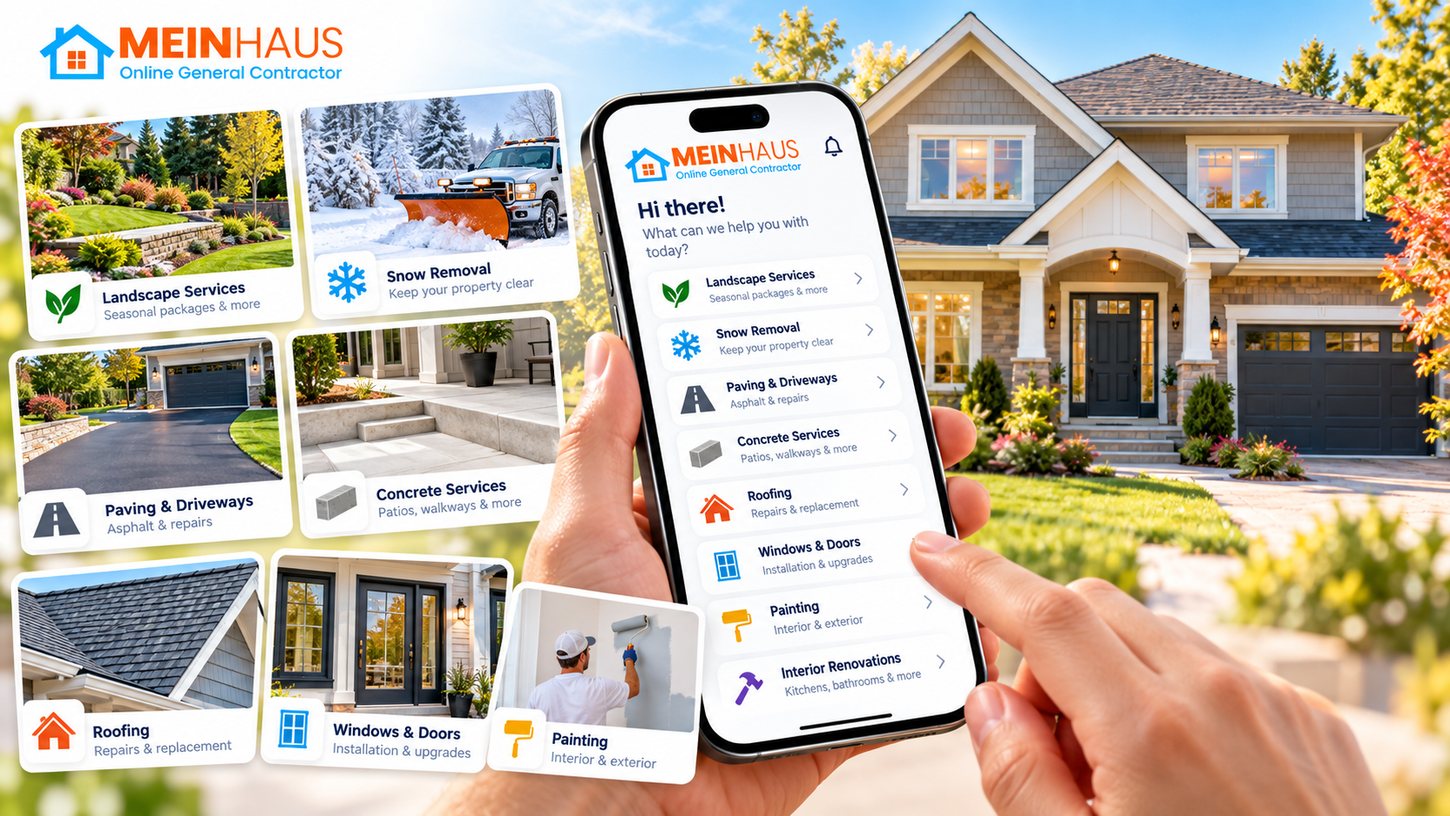
For MEINHAUS, procurement sits alongside several other professional needs.
A contractor may need project opportunities, insurance, pricing support, documentation, material discounts, scheduling, customer communication and eventually education or training resources. Fragmentation across those functions consumes time and creates inconsistent outcomes.
MEINHAUS Pro is being developed as a more unified operating environment for those workflows.
Insurance is one example. Pros can access the MEINHAUS insurance-partner pathway at https://www.meinhaus.ca/zen. Paint purchasing through Dulux is another. Over time, additional supplier, educational and professional-service relationships can become part of the same network.
That is strategically important because professional retention is not created by a single discount. It is created when the platform repeatedly makes operating the business easier.
The value of project-informed commerce is not limited to the contractor.
Manufacturers and distributors typically forecast demand using sales history, seasonality, channel data and broader market intelligence. Those tools are essential, but project platforms can potentially contribute another layer: forward-looking demand signals generated from work that is already being scoped or scheduled.
In aggregate and with appropriate privacy controls, that can support better questions:
This does not eliminate conventional forecasting. It potentially makes it more responsive.
Paint is the first obvious category, but the same model can extend much further.
| Project Signal | Potential Material Demand | Possible Connected Workflow |
|---|---|---|
| Roof replacement sold | Shingles, underlayment, flashing, vents, fasteners | Product selection, quantity planning, supplier availability |
| Basement finishing scheduled | Framing, insulation, drywall, flooring, paint, electrical | Sequenced procurement by project milestone |
| Bathroom renovation awarded | Waterproofing, tile, plumbing fixtures, drywall, paint | Selections tied to approved design and scope |
| Exterior repaint booked | Primer, exterior coating, caulking, masking and prep products | Weather-aware procurement and local store routing |
| Flooring project sold | Flooring, underlayment, transitions, adhesive, trim | Quantity and product recommendations from measured area |
In each case, the central idea is the same: the project can begin generating useful procurement intelligence before the contractor is standing at the counter.
Using project information more intelligently also creates responsibilities.
Not every project field should be shared with a supplier. Not every customer detail is relevant to material distribution. Not every professional will want the same level of personalization.
The better long-term model uses only the information necessary for the use case, applies appropriate permissions and focuses wherever possible on operational signals rather than unnecessary personal information.
For example, aggregate demand for interior paint in a geographic market can be commercially useful without revealing the identity of a homeowner. A professional can receive a relevant product recommendation without exposing unrelated customer information.
Intelligence should make construction commerce more efficient—not less trustworthy.
The MEINHAUS × Dulux partnership is an important first step in a larger vision: construction-material purchasing connected more directly to the work itself.
Today, the value is immediate and practical. Eligible MEINHAUS Pros can access meaningful professional Dulux pricing. Premium painting-category subscribers can receive an enhanced discount and dedicated representative support. Store access can be made easier from the professional workflow.
Tomorrow, the opportunity is deeper integration between project demand and procurement: products surfaced according to scope, offers delivered when they are actually relevant, purchasing forecasts informed by upcoming work and supply decisions increasingly connected to real field activity.
We believe the future of home services will be shaped by better information flow between homeowners, general contractors, tradespeople, manufacturers, distributors, insurers, lenders and the other organizations that support the home.
The objective is not to add technology for its own sake.
It is to reduce friction around the skilled work that still has to happen in the real world.
For painting professionals, that starts with better pricing, easier access and stronger support. For the construction industry, it points toward something larger: project-informed material distribution built around actual trade demand.
MEINHAUS is proud to be building that future alongside Dulux.
Existing MEINHAUS Pros can access the Dulux partnership directly at https://www.meinhaus.ca/professional/dulux. They can also sign in through https://www.meinhaus.ca/pro-app to manage their Pro account and related benefits.
New professionals can learn more about joining the MEINHAUS Pro network at https://www.meinhaus.ca/pro.
Explore Dulux professional products and resources at https://www.dulux.ca/professionals.
Free quote in under 24 hours. MEINHAUS-vetted crews. Payment held until the work is done right.
A homeowner’s guide to renovation deposits, material payments, credit cards, progress billing, written contracts and safer ways to pay for construction work.
Read Article
How MEINHAUS is using structured scopes, fixed pricing, online scheduling, documented payments, contractor verification and persistent project records to make home renovation more predictable, accountable and efficient.
Read Article
How to prepare your roof, eavestroughs, windows, exterior finishes, concrete, landscaping and home systems before freezing temperatures arrive
Read Article
Just bought a house? Discover which renovations to tackle first, what they cost in Canada, and how to prioritize repairs, upgrades and your budget before moving in.
Read Article
Why Every MEINHAUS Pro Should Carry Commercial Liability Insurance
Read Article
A Practical Guide for MEINHAUS Pros
Read Article
A general overview for meinhaus pros to understand the business cycle.
Read Article