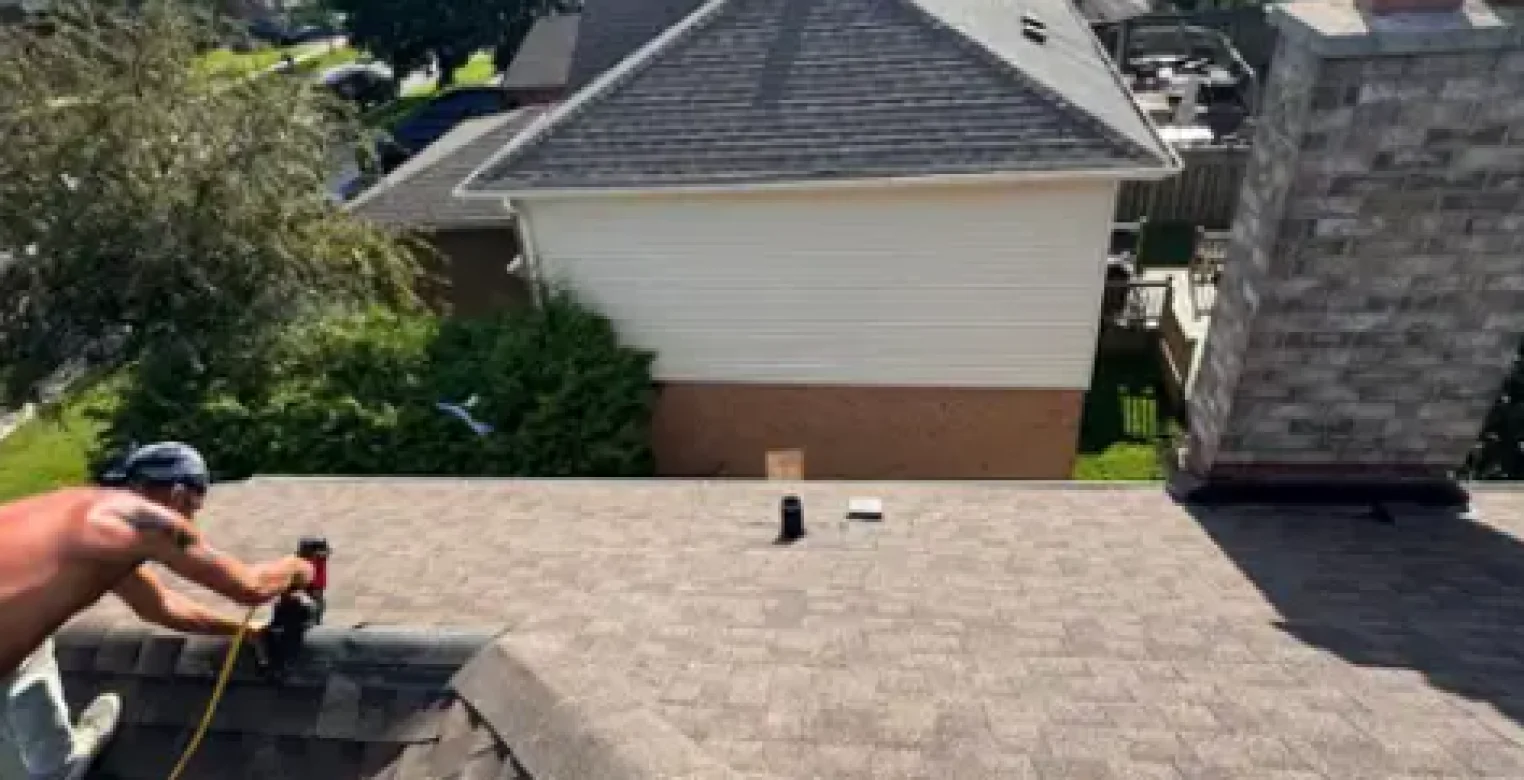
Roofing and Exterior Renovation Costs in Canada in 2026
A home’s exterior is not one isolated finish. It is a connected system that includes the roof, wall cladding, flashing, windows, doors, soffits, fascia, eavestroughs, drainage, foundation protection and every joint where one material meets another.
When those components work together, water is directed away from the building, the structure remains dry, heat loss is controlled and maintenance is manageable. When they are repaired independently without considering the rest of the building envelope, homeowners can spend a great deal of money without solving the underlying problem.
This guide explains what roofing and exterior renovations cost in Canada in 2026, including realistic ranges for:
- Asphalt, flat and metal roofing
- Roof repairs and plywood replacement
- Siding and exterior cladding
- Eavestroughs and downspouts
- Soffit and fascia
- Windows, exterior doors and skylights
- Brick, stone, stucco and masonry repairs
- Exterior waterproofing and foundation drainage
- Exterior insulation and air sealing
- Exterior painting and staining
- Decks, fences and exterior carpentry
- Permits, disposal, access equipment and hidden damage
All prices are stated in Canadian dollars. Unless specifically noted, they should be treated as planning figures before applicable GST, HST or provincial sales taxes.
The estimates in this guide are not universal price lists. They reflect practical 2026 budgeting ranges for professionally managed residential projects. Final pricing depends on the home, municipality, material selection, access, contractor availability and conditions discovered during demolition.
Homeowners planning several major improvements should also review the MEINHAUS 2026 Canadian home renovation cost guide, which compares exterior projects with kitchens, bathrooms, basements and full-home renovations.
How Much Does an Exterior Home Renovation Cost in Canada?
A Canadian exterior renovation can cost anywhere from approximately $5,000 for localized repairs to more than $200,000 for a premium whole-house building-envelope renovation. A standard project involving a roof, eavestroughs and selected exterior repairs commonly falls between $18,000 and $40,000. Adding siding, windows, masonry or waterproofing can raise the total considerably.
A useful way to budget is to place the project into one of five categories.
| Exterior project level |
Typical 2026 cost |
| Local repairs and maintenance |
$2,500–$12,000 |
| Roof and drainage renewal |
$15,000–$35,000 |
| Roof, soffit, fascia and eavestrough package |
$22,000–$50,000 |
| Roof and full siding renovation |
$40,000–$100,000 |
| Complete building-envelope renovation |
$75,000–$200,000+ |
A complete building-envelope renovation may include roofing, siding, exterior insulation, windows, doors, flashing, soffit, fascia, gutters, foundation waterproofing and masonry.
The cost is not simply the total square footage of the house. Exterior renovations are heavily affected by height, roof pitch, wall shape, access, scaffolding requirements and the number of transitions around windows, doors, dormers, balconies, chimneys and roof-to-wall connections.
A plain bungalow can be substantially less expensive to renovate than a narrow three-storey home, even when their total living areas are similar.
2026 Canadian Exterior Renovation Cost Summary
The following table provides practical national planning ranges.
| Exterior service |
Typical 2026 installed cost |
| Minor roof repair |
$450–$2,500 |
| Larger roof leak or flashing repair |
$1,500–$5,000+ |
| Asphalt shingle roof replacement |
$6–$12 per sq. ft. |
| Complex or premium shingle roofing |
$9–$16+ per sq. ft. |
| Residential flat roof replacement |
$10–$22 per sq. ft. |
| Metal roof installation |
$14–$30+ per sq. ft. |
| Roof plywood replacement |
$80–$160 per sheet installed |
| Skylight replacement with roofing work |
$1,500–$4,000 each |
| Seamless aluminum eavestroughs |
$10–$20 per linear ft. |
| Soffit replacement |
$12–$25 per linear ft. |
| Fascia replacement or capping |
$12–$28 per linear ft. |
| Full soffit, fascia and eaves package |
$4,000–$12,000+ |
| Vinyl siding |
$8–$16 per sq. ft. |
| Insulated vinyl siding |
$12–$21 per sq. ft. |
| Fibre cement siding |
$18–$35+ per sq. ft. |
| Engineered wood siding |
$13–$24 per sq. ft. |
| Steel or aluminum siding |
$13–$28 per sq. ft. |
| Wood siding |
$18–$38+ per sq. ft. |
| Brick veneer |
$25–$50+ per sq. ft. |
| Manufactured stone veneer |
$30–$60+ per sq. ft. |
| Acrylic or stucco cladding |
$18–$40 per sq. ft. |
| Standard replacement window |
$900–$2,000 each |
| Large or premium window |
$2,000–$5,000+ each |
| Entry door system |
$2,500–$8,000+ |
| Patio door |
$2,500–$7,500+ |
| Exterior foundation crack repair |
$1,200–$4,000 |
| Full exterior waterproofing |
$200–$450 per linear ft. |
| Chimney repair |
$1,500–$8,000 |
| Chimney rebuild |
$5,000–$20,000+ |
| Brick repointing |
$12–$30 per sq. ft. |
| Exterior house painting |
$5,000–$20,000+ |
| Pressure-treated deck |
$45–$80 per sq. ft. |
| Composite deck |
$70–$130+ per sq. ft. |
| Standard wood fence |
$70–$120 per linear ft. |
| Premium fence |
$110–$190+ per linear ft. |
These ranges are intentionally broad. Exterior work has more variables than many interior renovations because weather exposure, access and concealed damage can change the labour required.
Roof Replacement Costs in Canada
How Much Does a New Asphalt Roof Cost in 2026?
Most Canadian homeowners should budget approximately $6 to $12 per square foot for a professionally installed asphalt shingle roof in 2026. A complex, steep or premium roofing system may cost $9 to $16 per square foot or more. A typical detached home may therefore cost approximately $12,000 to $28,000.
Roofing contractors also measure roofs in “squares.” One roofing square equals 100 square feet of roof surface.
At $700 per roofing square, a 20-square roof would cost approximately $14,000. At $1,100 per roofing square, the same roof would cost approximately $22,000.
It is important to distinguish roof area from house area. A 2,000-square-foot home does not necessarily have a 2,000-square-foot roof. Roof slope, overhangs, attached garages, dormers and multiple levels all increase the actual roofing surface.
MEINHAUS provides roof replacement, leak repair, flat roofing and exterior-trim coordination through its residential roofing and exterior service.
Asphalt Roof Replacement by Size
| Approximate roof area |
Standard range |
Complex or premium range |
| 800 sq. ft. |
$6,000–$10,000 |
$9,000–$14,000 |
| 1,200 sq. ft. |
$8,000–$15,000 |
$12,000–$20,000 |
| 1,600 sq. ft. |
$10,000–$20,000 |
$15,000–$26,000 |
| 2,000 sq. ft. |
$13,000–$25,000 |
$19,000–$34,000 |
| 2,500 sq. ft. |
$16,000–$31,000 |
$24,000–$42,000 |
| 3,000 sq. ft. |
$20,000–$38,000 |
$29,000–$50,000+ |
Smaller roofs may have a higher cost per square foot because delivery, mobilization, disposal, safety setup and crew minimums must still be covered.
What Should a Roof Replacement Include?
A complete asphalt roof replacement should normally address more than the visible shingles. Depending on the roof and contract, the work may include:
- Site and landscape protection
- Removal of existing shingles
- Removal of old underlayment
- Inspection of the roof deck
- Replacement of damaged plywood or boards
- Ice-and-water membrane at vulnerable areas
- Synthetic or approved roofing underlayment
- Drip-edge metal
- Valley protection
- Starter shingles
- Field shingles
- Ridge or hip caps
- Plumbing-stack flashings
- Roof vents
- Wall and chimney flashing
- Disposal
- Magnetic nail cleanup
- Manufacturer documentation
- Workmanship warranty
Homeowners comparing quotes should not assume each contractor has included the same components. One quote may include full underlayment and new flashings, while another may reuse existing metals and charge for them later.
The existing MEINHAUS article on how much a roof replacement should cost provides a more focused explanation of roof slope, disposal, existing shingle layers and quote comparison.
What Makes a Roof More Expensive?
Roof Pitch
A low-slope bungalow is generally easier to access than a steep two-storey roof. Steep roofs can require additional anchors, ropes, lifts, scaffolding and slower material handling.
A steep or difficult roof may add approximately 15% to 50% to the labour component.
Height
A third-storey roof is not priced the same as a garage roof. Height increases risk, setup time and the cost of safely moving material and debris.
Number of Roof Sections
A simple gable roof is efficient. A roof with hips, valleys, dormers, turrets, intersecting additions, skylights and wall connections requires more cutting, flashing and detailing.
Existing Roofing Layers
Removing two or three layers costs more than removing one. Additional layers produce more waste and may conceal deteriorated decking.
Depending on local disposal rates and labour conditions, a second roofing layer can add approximately $1 to $3 per square foot.
Access
Limited driveway access, attached neighbouring properties, narrow lots, landscaping, overhead wires and homes built against ravines can all increase labour and equipment costs.
Decking Condition
Older homes may have plank decking, gaps, delaminated plywood or sections damaged by leakage. The deck cannot be properly assessed until the old roof is removed.
A roof quote should state how replacement decking will be charged.
Plywood Replacement Cost
Roof sheathing commonly costs approximately $80 to $160 per sheet installed during a roofing project. That amount can be higher when:
- The roof is steep
- Full redecking is required
- Old boards must be removed
- Lumber must be lifted several storeys
- Rafter repairs are required
- The sheathing thickness must be upgraded
A full redeck can add $5,000 to $15,000 or more to a detached-home roof.
Asphalt Shingles: Good, Better and Best
Not every asphalt shingle is equal, but product selection is only one part of roof performance. Underlayment, flashing, ventilation, fastening and workmanship are equally important.
| Roofing level |
Typical specification |
Relative cost |
| Good |
Standard architectural shingle, standard synthetic underlayment, required ice-and-water protection |
Base |
| Better |
Upgraded architectural shingle, enhanced underlayment, upgraded ventilation and accessories |
Base + 10%–20% |
| Best |
Premium or impact-resistant shingle, enhanced membranes, complete accessory system and stronger warranty options |
Base + 20%–40%+ |
Canadian homeowners frequently consider architectural shingles from manufacturers such as IKO, GAF, CertainTeed and BP. MEINHAUS commonly specifies IKO Cambridge shingles for standard residential roofing packages when appropriate for the project.
A manufacturer warranty should not be confused with a workmanship warranty. The federal Office of Consumer Affairs explains that a manufacturer warranty is a written product guarantee subject to specific terms and time periods. Those terms must be reviewed rather than judged only by the number of years printed in advertising. placement Costs
Residential flat roofs are common on additions, porches, garages, row houses and modern homes. They require a different approach from asphalt shingles because water drains more slowly and small detailing failures can become serious leaks.
Typical Flat Roof Pricing
| Flat roofing service |
2026 planning range |
| Localized flat-roof repair |
$750–$3,500 |
| Small porch or addition roof |
$4,000–$10,000 |
| Modified-bitumen replacement |
$10–$20 per sq. ft. |
| EPDM or similar membrane |
$11–$22 per sq. ft. |
| Premium multi-layer assembly |
$15–$30+ per sq. ft. |
| Drain or scupper repair |
$750–$3,000 |
| Parapet or wall-flashing work |
$1,500–$8,000+ |
A flat-roof quote should identify:
- Existing system and number of layers
- Whether insulation is included
- Drainage direction
- Roof drains or scuppers
- Parapet and wall details
- Mechanical penetrations
- Flashing terminations
- Whether open-flame installation methods are used
- Safety and insurance requirements
Torch-applied roofing introduces specific fire and insurance considerations. Zensurance notes that roofing insurance pricing and coverage can change based on the use of torch or hot-air applications, company size, project type and experience. osts in Canada
How Much Does a Metal Roof Cost?
A residential metal roof in Canada generally costs approximately $14 to $30 per square foot installed. Premium standing-seam systems, complicated roofs and extensive trim packages can exceed $30 per square foot. A typical detached home may cost between $30,000 and $75,000 or more.
Metal roofing costs more initially than standard asphalt shingles but may offer a substantially longer service life when properly specified and installed.
| Metal roofing type |
Typical installed cost |
| Exposed-fastener steel panels |
$12–$20 per sq. ft. |
| Steel shingle system |
$15–$25 per sq. ft. |
| Standing-seam metal |
$20–$35+ per sq. ft. |
| Premium aluminum or specialty metal |
$25–$45+ per sq. ft. |
Metal roofing is not automatically maintenance-free. Fasteners, seams, penetrations, snow retention, underlayment and transitions still require proper design.
Canadian manufacturer Ideal Roofing states that its steel roofing products are made partly from recycled steel, are recyclable and may last several times longer than traditional asphalt shingles. Actual life expectancy depends on the specific system, coating, climate and installation. osts
A roof does not always need full replacement. A repair may be reasonable when the roofing system is otherwise serviceable and the problem is localized.
Typical Roof Repair Prices
| Roof repair |
Typical 2026 cost |
| Replace several missing shingles |
$450–$1,200 |
| Small leak investigation and repair |
$550–$1,800 |
| Roof vent replacement |
$300–$800 each |
| Plumbing-stack flashing |
$450–$1,200 |
| Valley repair |
$1,500–$5,000 |
| Chimney flashing |
$1,200–$4,000 |
| Skylight flashing repair |
$900–$3,000 |
| Emergency tarp or temporary protection |
$500–$2,000 |
| Ice-dam service |
$500–$3,000+ |
| Larger partial roof replacement |
$3,000–$10,000+ |
Repair prices are affected by contractor minimums. A crew may only use a small amount of material, but it still needs to travel to the site, set up safely, diagnose the problem and warranty the work.
A very cheap repair that only applies sealant over a failed flashing may postpone the leak without resolving it. Good roof repair work begins by identifying how water is entering and where it is travelling.
Eavestrough and Downspout Costs
How Much Do New Eavestroughs Cost?
Seamless aluminum eavestrough installation commonly costs approximately $10 to $20 per linear foot in Canada. A typical detached home may cost between $1,800 and $4,500, while large homes, six-inch systems and complex drainage layouts may cost $5,000 or more.
| Ontario market comparisons published in 2026 show broad installed ranges, with five-inch seamless systems often priced below six-inch systems and premium drainage packages. ent |
Typical installed cost |
| Five-inch seamless aluminum |
$10–$18 per linear ft. |
| Six-inch seamless aluminum |
$14–$24 per linear ft. |
| Downspout replacement |
$250–$700 each |
| Downspout extension |
$75–$300 each |
| Leaf-protection system |
$10–$30 per linear ft. |
| Local repair or resealing |
$250–$900 |
| Complete detached-home system |
$1,800–$5,000+ |
Drainage design matters as much as the gutter material. Downspouts should discharge water where it can move away from the foundation without creating ice, erosion or neighbour-related drainage problems.
A larger six-inch eavestrough may be worthwhile where the roof has:
- Long uninterrupted slopes
- Large valleys
- Steep pitches
- Limited downspout locations
- Heavy tree debris
- High-volume rainfall exposure
The cheapest gutter quote may exclude removal, disposal, downspouts, elbows, extensions, leaf protection or repair of the fascia behind the old system.
Soffit and Fascia Replacement Costs
Soffit covers the underside of the roof overhang. Fascia covers or supports the vertical roof-edge area where eavestroughs are commonly attached.
Together, they affect ventilation, drainage, pest resistance and appearance.
Typical Soffit and Fascia Pricing
| Service |
Typical 2026 cost |
| Aluminum soffit replacement |
$12–$25 per linear ft. |
| Aluminum fascia capping |
$12–$22 per linear ft. |
| Fascia-board replacement and capping |
$18–$35 per linear ft. |
| Soffit ventilation upgrades |
$800–$3,500 |
| Complete soffit and fascia package |
$3,500–$9,000+ |
| Soffit, fascia and eavestrough package |
$5,000–$14,000+ |
Published 2026 Ontario pricing places many soffit and fascia installations in a similar broad range, although the exact method of measuring and whether wood replacement is included varies between contractors. t is damaged wood. Aluminum capping can conceal the original fascia board, but it cannot restore wood that has lost its ability to hold fasteners.
When gutters pull away from the roof edge, the problem may be:
- Failed gutter fasteners
- Rotten fascia boards
- Water entering behind the gutter
- Poor drip-edge detailing
- Ice loading
- Inadequate slope
- Too few downspouts
The most efficient time to replace soffit, fascia and eavestroughs is often during or immediately after roof replacement. The crews already have access equipment on site, and roof-edge details can be coordinated correctly.
Siding Replacement Costs in Canada
How Much Does New Siding Cost?
Installed siding commonly costs from approximately $8 per square foot for basic vinyl to more than $40 per square foot for premium fibre cement, wood, masonry or specialty cladding. A full detached-home siding project may cost approximately $20,000 to $80,000, while complex premium exteriors can exceed $100,000.
The price is based on exterior wall area, not interior floor area. Gables, dormers, bump-outs, windows, doors and architectural details all affect material waste and labour.
Siding Cost by Material
| Siding material |
Typical installed cost |
General position |
| Standard vinyl |
$8–$16 per sq. ft. |
Economical |
| Insulated vinyl |
$12–$21 per sq. ft. |
Mid-range |
| Aluminum |
$13–$24 per sq. ft. |
Mid-range |
| Steel siding |
$15–$28 per sq. ft. |
Mid- to premium |
| Engineered wood |
$13–$24 per sq. ft. |
Mid- to premium |
| Fibre cement |
$18–$35+ per sq. ft. |
Premium |
| Natural wood |
$18–$38+ per sq. ft. |
Premium |
| Acrylic or stucco |
$18–$40 per sq. ft. |
Premium |
| Brick veneer |
$25–$50+ per sq. ft. |
Premium |
| Manufactured stone |
$30–$60+ per sq. ft. |
Premium |
Canadian pricing published by different renovation companies varies considerably, particularly for fibre cement. Some estimates include only straightforward cladding installation, while others include tear-off, insulation, membranes, trim, access equipment and disposal. This is why siding prices found online can appear to contradict one another. d Address
A thorough siding scope should clarify:
- Removal of existing siding
- Disposal
- Wall inspection
- Repair of damaged sheathing
- Weather-resistive barrier
- Flashing tape
- Window and door flashing
- Starter strips
- Corner details
- J-channel or proprietary trim
- Soffit and fascia interfaces
- Electrical, hose-bib and vent penetrations
- Exterior insulation
- Strapping or rain-screen requirements
- Caulking
- Painting, if required
- Access equipment
- Manufacturer installation requirements
Exterior wall damage often becomes visible only after old siding is removed. Water can enter around windows, roof-wall joints, deck ledgers and improperly flashed penetrations without creating an immediate interior leak.
Roofmart supplies roofing, siding, metal and building-envelope materials through locations across Canada, making it a useful product and technical resource for Canadian exterior projects. g Costs
Vinyl remains one of the most affordable whole-house cladding options.
A standard installed range is approximately $8 to $16 per square foot. Insulated or premium profiles may cost $12 to $21 per square foot.
Vinyl siding can provide good value when:
- The wall is properly prepared
- The siding is allowed to expand and contract
- Fasteners are not driven too tightly
- Openings are flashed correctly
- Appropriate clearances are maintained
- Dark colours and profiles are suitable for the exposure
Common failures include buckling, loose panels, poor corner alignment and water entering behind improperly detailed openings.
Vinyl siding is not the waterproofing layer by itself. Water that passes behind the siding must be managed by the underlying wall assembly.
Fibre Cement Siding Costs
Fibre cement is heavier and more labour-intensive than vinyl, but it provides a substantial appearance and is available in lap, panel, shake and board-and-batten styles.
A realistic 2026 planning range is approximately $18 to $35 per square foot installed. Complex homes or premium trim packages can exceed that amount.
The cost increases because fibre cement may require:
- Specialized cutting and dust control
- More labour for handling
- Proper storage
- Correct fasteners
- Detailed flashing
- Joint treatment
- Caulking
- Field painting or touch-up
- Additional scaffolding
James Hardie states that many of its siding products carry a 30-year non-prorated limited substrate warranty, while certain factory-applied finishes carry separate coverage. Warranty eligibility depends on the specific product and installation requirements. se the manufacturer’s current installation and technical documentation, not a generic siding detail copied from another product.
Wood, Engineered Wood and Metal Siding
Natural Wood
Wood offers a warm appearance but usually requires more ongoing maintenance than vinyl, steel or fibre cement.
Installed prices commonly range from $18 to $38 per square foot or more, depending on species, profile and finishing.
Maintenance may include:
- Washing
- Staining
- Painting
- Sealing
- Repair of checks or splits
- Replacement of decayed boards
- Monitoring insect activity
Engineered Wood
Engineered wood products can provide a wood-like appearance at a lower weight and sometimes a lower installed cost than natural wood.
Typical pricing is approximately $13 to $24 per square foot.
End cuts, clearances, flashing and paint maintenance remain important. A durable product can still fail when installed too close to roofing, soil, decks or standing water.
Steel and Aluminum
Metal siding commonly costs approximately $13 to $28 per square foot.
Steel may offer impact resistance and modern profiles, while aluminum is corrosion-resistant but can dent. Product thickness, coating, profile and installer experience influence performance.
Window Replacement Costs
How Much Do Replacement Windows Cost in Canada?
Standard professionally installed replacement windows commonly cost approximately $900 to $2,000 per opening in Canada. Larger, custom, triple-glazed or premium windows may cost $2,000 to $5,000 or more. Replacing 10 to 15 windows can therefore cost approximately $15,000 to $40,000.
| Window type |
Typical installed cost |
| Small fixed or basement window |
$700–$1,400 |
| Standard slider or casement |
$900–$2,000 |
| Large casement or picture window |
$1,500–$3,500 |
| Bay or bow window |
$4,000–$10,000+ |
| Egress window conversion |
$4,000–$10,000+ |
| Skylight replacement |
$1,500–$4,000 |
| New structural window opening |
$5,000–$15,000+ |
The cost of a window is affected by:
- Rough-opening size
- Frame material
- Double or triple glazing
- Operating style
- Glass coatings
- Energy performance
- Exterior colour
- Interior finish
- Brickmould
- Custom capping
- Rot repair
- Masonry alterations
- Structural work
- Height and access
Natural Resources Canada explains that windows may be repaired through weatherstripping, caulking and hardware service, or replaced when appropriate. The surrounding wall and installation details must still protect the building envelope. valuate the complete window rather than relying on one marketing term. Useful performance measures include:
- U-factor
- Energy rating
- Solar heat-gain coefficient
- Air leakage
- Condensation resistance
- Glass configuration
- Frame construction
An efficient window installed into a damaged, unsealed or poorly flashed opening will not deliver its intended performance.
Exterior Door Replacement Costs
Exterior doors vary widely because a “front door” can mean anything from a basic steel slab to a custom double-door system with sidelights, transoms and premium hardware.
| Exterior door project |
Typical installed cost |
| Basic insulated steel door |
$1,800–$3,500 |
| Mid-range entry system |
$2,500–$5,500 |
| Premium fibreglass entry door |
$4,000–$8,000+ |
| Door with sidelight |
$4,500–$10,000+ |
| Double entry system |
$6,000–$15,000+ |
| Sliding patio door |
$2,500–$7,500 |
| Premium folding or multi-panel door |
$10,000–$35,000+ |
| Exterior cold-cellar or utility door |
$1,800–$4,000 |
Hidden costs can include sill rot, framing repairs, masonry cutting, interior trim, exterior capping, alarm sensors and refinishing.
Window and door replacements may improve comfort and air tightness, but the exact financial payback depends on the condition of the old units, the new product and the rest of the home.
The former Canada Greener Homes Grant and Loan are closed to new applications as of 2026. Homeowners should verify current provincial, territorial and utility incentives before assuming federal funding is available. ick and Chimney Repair Costs
Masonry protects the building while also supporting its appearance. Mortar deterioration, cracking, failed lintels, spalling bricks and chimney damage should be investigated before cosmetic patching.
MEINHAUS coordinates brick, stone and related work through its stone, masonry and asphalt service.
Typical Masonry Costs
| Masonry work |
Typical 2026 cost |
| Small mortar repair |
$750–$2,500 |
| Brick replacement |
$25–$60 per sq. ft. |
| Tuckpointing or repointing |
$12–$30 per sq. ft. |
| Window lintel repair |
$2,000–$7,500 |
| Chimney flashing repair |
$1,200–$4,000 |
| Chimney crown repair |
$1,000–$4,000 |
| Partial chimney rebuild |
$4,000–$10,000 |
| Full chimney rebuild |
$8,000–$20,000+ |
| Manufactured stone veneer |
$30–$60+ per sq. ft. |
| Natural stonework |
$45–$100+ per sq. ft. |
A crack in brick veneer may be caused by:
- Mortar shrinkage
- Freeze-thaw deterioration
- Rusting steel
- Failed lintels
- Settlement
- Structural movement
- Water entering behind the veneer
- Inadequate control joints
Replacing cracked mortar without identifying movement can result in the crack returning.
Chimneys are particularly exposed. Their condition should be coordinated with roofing because chimney flashing, counterflashing, crowns and caps all influence water entry.
Stucco and Exterior Finish Costs
Traditional stucco, acrylic finishes and exterior insulation systems can provide durable and attractive wall assemblies when correctly installed.
| Stucco service |
Typical 2026 cost |
| Local stucco repair |
$800–$3,500 |
| Crack repair and coating |
$2,000–$8,000 |
| New stucco application |
$18–$35 per sq. ft. |
| Premium acrylic system |
$25–$40+ per sq. ft. |
| Removal and full replacement |
$30–$55+ per sq. ft. |
Stucco problems often appear around:
- Windows
- Doors
- Roof-wall intersections
- Deck ledgers
- Balconies
- Utility penetrations
- Grade-level clearances
Painting over cracks can improve appearance but may not correct water intrusion or movement.
Foundation Waterproofing Costs
How Much Does Exterior Waterproofing Cost?
Exterior foundation waterproofing commonly costs approximately $200 to $450 per linear foot in Canada. A localized repair may cost $4,000 to $12,000, while waterproofing a substantial portion of a detached home can cost $20,000 to $50,000 or more.
MEINHAUS offers crack repair, excavation and drainage-related work through its waterproofing and excavation service.
Foundation Repair Cost Table
| Waterproofing service |
Typical 2026 cost |
| Interior crack injection |
$600–$1,500 |
| Exterior localized crack repair |
$1,500–$4,500 |
| Small excavation and waterproofing section |
$4,000–$10,000 |
| Exterior waterproofing |
$200–$450 per linear ft. |
| Window well replacement |
$900–$3,000 each |
| Egress window and well |
$4,000–$10,000+ |
| Sump-pump replacement |
$1,200–$3,500 |
| Interior drainage system |
$100–$250 per linear ft. |
| Full-house waterproofing |
$25,000–$60,000+ |
Exterior waterproofing may include:
- Excavation
- Soil removal or storage
- Cleaning the foundation
- Crack repair
- Parging repairs
- Waterproofing membrane
- Drainage board
- Weeping-tile work
- Washed stone
- Window-well installation
- Backfilling
- Compaction
- Rough grading
- Restoration of landscaping or hardscape
The quotation should state what happens to decks, fences, air-conditioning units, patios, driveways and landscaping that obstruct access.
Water around a foundation is not always caused by a failed membrane. Roof drainage, short downspouts, settled grading, blocked window wells and hardscape sloping toward the home can all contribute.
Exterior Insulation and Air-Sealing Costs
Exterior renovations create an opportunity to improve insulation because the wall or roof assembly is already open.
| Energy upgrade |
Typical 2026 cost |
| Attic insulation top-up |
$2.50–$5.50 per sq. ft. |
| Attic air sealing |
$1,000–$4,000 |
| Spray-foam insulation |
$4–$9 per sq. ft. |
| Exterior rigid insulation |
$8–$20+ per sq. ft. additional |
| Rim-joist insulation |
$1,500–$5,000 |
| EnerGuide evaluation |
Varies by provider and program |
The decision to add exterior insulation should be made before new siding is ordered. It affects:
- Window depth
- Door depth
- Flashing
- Roof overhangs
- Electrical penetrations
- Hose bibs
- Gas and mechanical vents
- Cladding fasteners
- Exterior trim
Natural Resources Canada notes that an EnerGuide home evaluation can identify how a home uses energy and which retrofits may improve efficiency. ot be added without considering moisture movement, ventilation and drying potential. A wall that is warmer but unable to dry can develop concealed problems.
Exterior Painting and Staining Costs
Painting can extend the life of wood, stucco, trim and other suitable surfaces. It is not a substitute for replacement where the substrate has decayed or lost structural integrity.
MEINHAUS provides full-home and localized exterior painting services, including preparation, caulking, scraping, sanding and weather-resistant coatings.
Exterior Painting Cost Table
| Exterior painting service |
Typical 2026 cost |
| Entry door |
$350–$900 |
| Garage door |
$500–$1,500 |
| Small trim package |
$1,500–$5,000 |
| Deck or fence staining |
$2–$7 per sq. ft. |
| Full exterior painting |
$5,000–$20,000+ |
| Large or highly detailed home |
$15,000–$35,000+ |
The largest cost is often preparation. Exterior painting may require:
- Washing
- Scraping
- Sanding
- Caulking
- Wood repairs
- Priming
- Masking
- Lift or scaffold access
- Multiple finish coats
Dulux describes its exterior acrylic products as being formulated for Canadian weather and for resistance to cracking, peeling, moisture and mildew deterioration. Product suitability still depends on the surface, preparation and application conditions. urs can increase heat absorption and may not be appropriate for every vinyl, composite or previously coated surface. Manufacturer approval should be confirmed.
Deck and Fence Costs
Decks and fences are not always considered part of the building envelope, but they frequently connect to exterior walls and can affect drainage, access and water management.
MEINHAUS provides new construction and repair through its deck and fence service.
Deck Costs
| Deck type |
Typical installed cost |
| Basic pressure-treated deck |
$45–$80 per sq. ft. |
| Cedar deck |
$60–$100 per sq. ft. |
| Composite deck |
$70–$130+ per sq. ft. |
| Aluminum railing |
$150–$300 per linear ft. |
| Glass railing |
$250–$500+ per linear ft. |
| Deck stairs |
$2,000–$8,000+ |
| Structural deck repair |
$2,000–$15,000+ |
Fence Costs
| Fence type |
Typical installed cost |
| Standard pressure-treated fence |
$70–$120 per linear ft. |
| Six-by-six-post premium fence |
$100–$160 per linear ft. |
| Decorative or lattice-top fence |
$120–$190+ per linear ft. |
| Chain-link fence |
$40–$90 per linear ft. |
| Composite fence |
$150–$300+ per linear ft. |
| Standard gate |
$600–$1,500 |
| Premium or double gate |
$1,500–$4,000+ |
Deck ledger flashing deserves special attention. A poorly flashed deck connection can direct water into the wall assembly and cause concealed rot.
Decks and fences may require zoning review, utility locates or building permits depending on height, location and municipality.
Exterior Renovation Costs by Province
The following factors influence regional pricing:
- Labour availability
- Provincial safety requirements
- Transportation
- Supplier competition
- Disposal fees
- Insurance
- Climate
- Construction season
- Municipal permits
- Home style and density
Rather than assigning one false average to an entire province, the table below uses Ontario mid-sized-city pricing as a baseline.
| Region |
Approximate planning adjustment |
| Ontario mid-sized cities |
Baseline |
| Greater Toronto Area |
Baseline + 10%–25% |
| Alberta major cities |
Baseline to +15% |
| British Columbia major cities |
Baseline + 15%–40% |
| Quebec major cities |
Baseline -5% to +15% |
| Manitoba |
Baseline -5% to +10% |
| Saskatchewan |
Baseline -5% to +10% |
| Atlantic Canada |
Baseline to +20% |
| Northern and remote regions |
Baseline +30%–100%+ |
These are planning adjustments, not fixed regional price indexes.
Ontario
Toronto, Mississauga, Oakville, Burlington and Vaughan often carry higher labour, insurance, access and disposal costs.
Hamilton, Cambridge, Kitchener, Waterloo, Guelph and London may be moderately lower, although the difference becomes smaller for specialty materials or projects requiring travel.
Ottawa pricing can be influenced by bilingual service requirements, government-related demand, winter conditions and the availability of specialized exterior trades.
Alberta
Calgary and Edmonton have strong exterior-trade markets, but hail exposure can create periods of intense roofing and siding demand. Labour and material availability can change quickly following major storms.
British Columbia
Vancouver and Victoria frequently carry higher labour and access costs. Rain exposure, steep terrain, complex architecture and rain-screen requirements can also increase siding and building-envelope costs.
Quebec
Pricing in Montreal, Quebec City and surrounding regions varies based on labour structure, contractor licensing, language, material preferences and regional construction practices.
Manitoba and Saskatchewan
Winnipeg, Regina and Saskatoon may have lower base labour costs than Vancouver or Toronto, but extreme temperature swings and shipping costs affect exterior-material selection.
Atlantic Canada
Halifax and other Atlantic communities face wind-driven rain, coastal exposure and transportation costs. Localized shortages can make specialty exterior products more expensive.
Northern Canada
Remote access, freight, accommodation, limited labour availability and a short construction season can significantly increase costs. Material planning is especially important because missing components may take weeks to replace.
Exterior Renovation Costs by Canadian City
| City or region |
Typical pricing position |
| Toronto |
High |
| Mississauga |
High |
| Oakville |
High |
| Burlington |
Moderate to high |
| Hamilton |
Moderate |
| Milton |
Moderate to high |
| Cambridge |
Moderate |
| Kitchener-Waterloo |
Moderate |
| Guelph |
Moderate |
| London |
Moderate |
| Ottawa |
Moderate to high |
| Calgary |
Moderate to high |
| Edmonton |
Moderate to high |
| Vancouver |
Very high |
| Victoria |
High to very high |
| Winnipeg |
Moderate |
| Regina |
Moderate |
| Saskatoon |
Moderate |
| Halifax |
Moderate to high |
The homeowner should still obtain a property-specific quote. A simple Vancouver bungalow can cost less than a complicated Cambridge three-storey home.
Permits and Building-Code Considerations
Do Exterior Renovations Require a Building Permit?
Direct replacement of shingles, siding, windows or gutters may not require a building permit when no structural changes are made, but requirements vary by municipality. Structural roof work, enlarged openings, decks, new entrances, foundation alterations and major changes to the building envelope frequently require permits or engineering.
Canada’s model construction requirements are published through the National Research Council. The National Building Code of Canada 2025 is now available, but provinces and territories adopt or amend model codes according to their own processes. Homeowners must follow the code legally in force in their province and municipality, not simply the newest national publication. resource explaining when a building permit may be required.
Projects that may trigger permit, engineering or zoning review include:
- Structural roof changes
- New dormers
- Roofline alterations
- Enlarged windows or doors
- New window openings
- Egress-window conversions
- Structural lintel changes
- Deck construction
- Raised platforms
- Exterior stairs
- Retaining walls
- Foundation excavation
- Addition of exterior insulation in constrained locations
- Changes near property lines
- Heritage-property work
Typical Permit and Professional Costs
| Requirement |
Typical planning range |
| Basic permit |
$250–$1,500 |
| Deck permit |
$500–$2,000 |
| Engineering letter or detail |
$750–$3,000 |
| Structural drawings |
$1,500–$6,000+ |
| Survey or grading plan |
$1,500–$5,000+ |
| Heritage review |
Varies |
| Municipal inspection fees |
Often included, but varies |
Permit fees are usually a small part of a major project. The more significant cost is bringing the proposed work into compliance.
Insurance and Contractor Verification
Roofing and exterior construction involve ladders, falls, open wall assemblies, weather exposure and the possibility of damage to neighbouring property.
Ontario publishes specific guidance for homeowners hiring roofers, including the importance of understanding insurance, worker safety and potential homeowner liability. est:
- Legal business name
- Proof of commercial general liability insurance
- Workers’ compensation clearance where applicable
- Written scope
- Material specifications
- Start and completion expectations
- Payment schedule
- Warranty terms
- Change-order procedure
- Disposal responsibility
- Confirmation of permits
- Confirmation of who is supervising the work
Zensurance recommends that roofing contractors consider at least $2 million in liability coverage, written contracts, trained workers and verification that subcontractors carry appropriate insurance. o review the MEINHAUS guide on how to hire a general contractor or home-service professional.
Renovations can also affect the homeowner’s policy. TD Insurance advises homeowners that renovations may change coverage and should be discussed with the insurer before work begins. nsurance Cover Roof or Exterior Damage?
Home insurance may cover sudden and accidental damage caused by an insured event, but it generally does not function as a maintenance plan.
A storm-damaged roof may be treated differently from a roof that has leaked slowly for years because of age, wear or neglected maintenance.
TD Insurance states that many policies distinguish sudden accidental water damage from long-term leakage or poor maintenance, and that optional coverage may be needed for certain flood, ice-dam or roof-drain events. Coverage always depends on the wording of the individual policy. e from immediate danger. 2. Prevent further damage where safely possible. 3. Photograph the property. 4. Record the date and nature of the event. 5. Contact the insurer. 6. Avoid authorizing major permanent work before understanding the claims process. 7. Use a contractor capable of documenting the damage and proposed repairs.
Do not allow an unknown contractor to pressure you into signing over insurance proceeds or authorizing unnecessary work immediately after a storm.
Repair or Replace?
When Repair Is Usually Reasonable
Repair may be appropriate when:
- Damage is localized
- The remaining material has useful life
- Matching products are available
- The cause can be corrected
- The substrate remains sound
- A repair will not interfere with a larger planned replacement
- The repair can be properly warrantied
When Replacement Is Usually Better
Replacement may make more sense when:
- Failures are widespread
- Several repairs have already been attempted
- Materials are brittle or unavailable
- Water damage exists behind the finish
- The system is near the end of its expected service life
- A major renovation will disturb the same area
- Insurance or lender concerns exist
- Energy improvements require opening the assembly
The correct comparison is not repair cost versus replacement cost today. It is the expected total cost over the next five to fifteen years.
A $2,500 repair on a roof that needs replacement next year may not be a good investment. A $1,200 repair that extends an otherwise healthy roof for five years may be excellent value.
Good, Better and Best Exterior Renovation Packages
Good: Essential Protection
A good package focuses on stopping active deterioration.
It may include:
- Standard architectural shingles
- Required underlayment and flashings
- Five-inch aluminum eavestroughs
- Local soffit and fascia repairs
- Standard vinyl siding
- Basic window replacements where failed
- Local masonry repairs
- Standard workmanship warranty
Typical project range: $20,000–$50,000
Better: Coordinated Exterior Renewal
A better package considers the entire roof and wall transition.
It may include:
- Upgraded architectural shingles
- Enhanced membranes
- Improved ventilation
- Six-inch eavestroughs
- Full soffit and fascia replacement
- Insulated vinyl or engineered siding
- Energy-efficient windows
- New exterior capping
- Corrected grading and drainage
- Longer workmanship coverage
Typical project range: $45,000–$100,000
Best: Premium Building-Envelope Renovation
A best-level project prioritizes durability, appearance and long-term coordination.
It may include:
- Premium or impact-resistant roofing
- Standing-seam or steel roofing
- Full roof-deck replacement where required
- Premium drainage system
- Fibre cement, premium metal, wood or masonry cladding
- Exterior continuous insulation
- Triple-glazed windows
- Premium doors
- Full waterproofing
- Architectural trim and lighting
- Engineered details
- Comprehensive documentation and warranties
Typical project range: $90,000–$250,000+**
Hidden Exterior Renovation Costs
Exterior quotes can change because the most serious conditions are often concealed.
Common Hidden Costs
| Hidden condition |
Possible additional cost |
| Rotten roof decking |
$1,000–$15,000+ |
| Rafter or truss repair |
$1,500–$15,000+ |
| Wall-sheathing replacement |
$3,000–$25,000+ |
| Window-opening rot |
$500–$3,000 per opening |
| Asbestos-containing materials |
$2,000–$20,000+ |
| Lead-paint controls |
Varies |
| Failed lintel |
$2,000–$7,500 each |
| Foundation damage |
$3,000–$30,000+ |
| Landscape restoration |
$1,000–$15,000+ |
| Electrical-service relocation |
$2,000–$10,000+ |
| Gas or mechanical vent changes |
$500–$5,000+ |
| Scaffolding or lift rental |
$1,500–$10,000+ |
| Additional disposal |
$500–$5,000+ |
A good contract should explain how concealed damage will be documented and authorized. It should not give the contractor unlimited permission to add costs, but it should also recognize that demolition can expose necessary repairs.
How to Save Money Without Lowering Quality
Combine Related Work
Roofing, soffit, fascia and eavestroughs use similar access equipment. Siding, windows and exterior insulation also share demolition and flashing work.
Combining related work can reduce:
- Mobilization
- Scaffolding
- Disposal
- Delivery
- Repeated demolition
- Repeated exterior repairs
Do the Work in the Correct Order
A common sequence is:
- Structural and foundation repairs
- Roof-deck repairs
- Roofing
- Windows and doors
- Wall membranes and insulation
- Siding
- Soffit and fascia
- Eavestroughs and downspouts
- Masonry finishing
- Painting
- Grading and landscaping
The exact sequence depends on the design, but the goal is to avoid removing new work to complete a later step.
Keep the Design Consistent
Using too many cladding products increases waste, trim details and labour. One main siding product with a carefully selected accent is often more cost-effective than several materials competing across the façade.
Avoid Emergency Timing
Active leaks must be addressed quickly, but planned replacements are usually easier to price and schedule than emergency work during a storm.
Use Allowances Carefully
Material allowances should identify what quantity and quality are included. A low allowance can make a quote appear affordable before selections are made.
Do Not Remove Essential Scope
Eliminating underlayment, flashing, membranes, ventilation or proper disposal to reduce cost often creates a false saving.
Exterior Renovation Return on Investment
Exterior renovations can support property value because they affect curb appeal, water protection, energy performance and buyer confidence.
The highest-value exterior work is usually work that:
- Corrects visible deterioration
- Stops active water entry
- Removes insurance concerns
- Improves first impressions
- Reduces immediate maintenance
- Matches the home’s architecture
- Includes transferable documentation or warranties
A new roof does not always return every dollar through a higher sale price, but an obviously failed roof can reduce buyer confidence by more than the replacement cost.
Similarly, premium siding may improve appearance, but installing it over a wall with unresolved water damage does not create real value.
The best return usually comes from solving defects first and upgrading finishes second.
Financing an Exterior Renovation
Exterior work is often less optional than a cosmetic interior remodel. Homeowners may finance it through:
- Savings
- Home-equity line of credit
- Secured renovation loan
- Mortgage refinancing
- Contractor financing
- Insurance settlement
- Provincial or utility energy program
- Staged construction
Before using contractor financing, compare:
- Interest rate
- Administrative fees
- Deferred-interest terms
- Early-payment penalties
- Total repayment amount
- Whether financing affects project pricing
- Who owns the loan
- What happens if work is delayed
The federal Canada Greener Homes Grant and Loan are closed to new applications. Current opportunities are more likely to be found through provincial governments, municipalities, utilities or income-qualified programs. rranties
An exterior renovation may involve several separate warranties.
Manufacturer Warranty
This covers specified defects in the product, subject to the manufacturer’s terms.
It may not cover:
- Incorrect installation
- Wind beyond stated limits
- Poor ventilation
- Building movement
- Ponding water
- Neglected maintenance
- Labour
- Disposal
- Accessories from another manufacturer
Workmanship Warranty
This is provided by the contractor or general contractor and relates to installation.
The contract should state:
- Length of coverage
- What is covered
- Exclusions
- Response procedure
- Transferability
- Maintenance obligations
- Who administers the warranty
Extended System Warranty
Some manufacturers offer enhanced coverage when approved accessories are used and installation conditions are met.
Do not judge a roof, siding or window warranty only by a “lifetime” label. Read the non-prorated period, transfer terms, labour coverage and exclusions.
MEINHAUS exterior projects use written scopes and warranty-backed project management rather than relying solely on verbal promises.
Exterior Maintenance Schedule
Every Spring
- Inspect roof edges and visible shingles
- Check for winter damage
- Confirm gutters are flowing
- Check downspout extensions
- Inspect siding for loose panels
- Look for new masonry cracks
- Check window and door sealants
- Inspect decks and railings
- Confirm grading directs water away
Every Fall
- Remove leaves from eavestroughs
- Check roof valleys
- Inspect flashing
- Secure loose exterior items
- Check caulking
- Drain exterior hoses
- Confirm window wells are clear
- Inspect foundation drainage
CMHC homeowner guidance includes cleaning eavestroughs and checking the roof for wear or damage as part of regular seasonal maintenance. rms
- Photograph missing or damaged shingles
- Check siding and metal trim
- Look for interior staining
- Inspect eavestrough alignment
- Check trees and branches
- Review decks, fences and exterior structures
- Contact the insurer where appropriate
Every Three to Five Years
- Review exterior coatings
- Assess sealants
- Inspect roof penetrations
- Review attic ventilation
- Check exposed wood
- Inspect masonry mortar
- Review deck ledger and structural connections
Common Exterior Renovation Mistakes
Choosing by Total Price Alone
A quote is only useful when the scope is understood. A $15,000 roof and a $22,000 roof may not include the same demolition, membrane, flashing, ventilation, warranty or disposal.
Replacing Finishes Before Solving Water Problems
New siding will not fix a leaking roof-wall connection. New paint will not fix rotten wood. New gutters will not correct soil sloping toward the house unless the downspouts and grading are also addressed.
Ignoring Transitions
Most exterior leaks do not occur in the middle of a large uninterrupted surface. They occur where systems meet:
- Roof and wall
- Window and siding
- Chimney and roofing
- Deck and wall
- Foundation and grade
- Eavestrough and fascia
Hiring Uninsured Labour
A low labour rate can expose the homeowner to substantial risk when workers are not properly insured or covered.
MEINHAUS explains the broader value of contractor screening in its article on why hiring a verified contractor can save time, money and stress.
Paying Too Much Up Front
Deposits should correspond to legitimate mobilization, custom material and scheduling requirements. Payment milestones should reflect visible progress.
Failing to Photograph Concealed Work
Membranes, flashing and structural repairs disappear behind the final finish. Progress photos create a record for the homeowner, contractor, warranty provider and future buyer.
Frequently Asked Questions
1. How much does a roof replacement cost in Ontario in 2026?
A standard asphalt roof replacement in Ontario commonly costs approximately $6 to $12 per square foot. A typical detached home may cost $12,000 to $28,000, while steep, tall or highly complex roofs can exceed $35,000. Plywood, skylights, multiple layers and premium shingles are normally priced separately or through allowances.
2. How much does a roof cost in Alberta?
A typical Alberta asphalt roof may cost approximately $7 to $13 per square foot, depending on the city, pitch, material, hail-related demand and existing layers. Calgary and Edmonton pricing can rise quickly after major storm events because contractor and supplier capacity becomes constrained.
3. How much does a roof cost in British Columbia?
British Columbia roof replacements commonly cost approximately $8 to $15 per square foot, with Vancouver, Victoria, steep sites and complex building-envelope details often reaching the higher end. Access, rain protection, disposal and labour costs can be more significant than in many smaller Canadian markets.
4. How much does a new roof cost per roofing square?
A standard asphalt roof may cost approximately $600 to $1,200 per roofing square, while premium or complex installations may cost $900 to $1,600 or more. One roofing square equals 100 square feet of roof surface.
5. How many bundles of shingles are in one roofing square?
Most standard asphalt shingles require approximately three bundles per roofing square, although some specialty products use a different number. Waste must be added for valleys, hips, ridges, starter courses and roof complexity. The manufacturer’s coverage information should always be used.
6. Do I need to replace all the roof plywood?
Not necessarily. Plywood should be replaced where it is rotten, delaminated, structurally unsound or unsuitable for the new roofing system. Full redecking may be recommended when old boards have large gaps, the existing deck is inconsistent or extensive deterioration is discovered.
7. Can new shingles be installed over old shingles?
In some jurisdictions and conditions, installing over one existing layer may be possible, but removal is usually preferable. Tear-off allows inspection of the deck, reduces weight and produces a flatter installation. Manufacturer requirements, local code and the condition of the existing roof must be considered.
8. How long does an asphalt roof last in Canada?
Many asphalt roofs provide approximately 15 to 30 years of service, but actual life depends on product, ventilation, installation, roof orientation, storm exposure and maintenance. A warranty period is not the same as expected service life.
9. How much does metal roofing cost?
Residential metal roofing commonly costs approximately $14 to $30 per square foot installed. Standing-seam, premium steel-shingle and complicated systems may cost more. A detached home can cost approximately $30,000 to $75,000 or higher.
10. How much do soffit and fascia cost?
A full soffit and fascia replacement often costs approximately $3,500 to $9,000. Adding eavestroughs and downspouts can bring the combined package to approximately $5,000 to $14,000 or more.
11. How much do new eavestroughs cost?
Seamless aluminum eavestroughs commonly cost approximately $10 to $20 per linear foot. A standard detached home may cost $1,800 to $4,500, while six-inch gutters, leaf protection and complex downspout systems cost more.
12. Are six-inch gutters worth it?
Six-inch gutters can be worthwhile on large, steep or complicated roofs and where downspout locations are limited. They can carry more water, but they still require proper slope, fastening and discharge. Larger gutters will not solve poor grading or undersized underground drainage.
13. How much does vinyl siding cost?
Vinyl siding commonly costs approximately $8 to $16 per square foot installed. Premium profiles, insulation, removal of old siding, wall repair and detailed trim can raise the price to $20 per square foot or more.
14. How much does James Hardie siding cost?
Fibre cement siding such as James Hardie commonly costs approximately $18 to $35 per square foot installed in Canada. Complex designs, premium trim, wall repairs, exterior insulation and extensive scaffolding can raise the cost further.
15. Is fibre cement better than vinyl?
Fibre cement is thicker and provides a different appearance, while vinyl generally costs less and requires less finishing. Neither is universally better. The decision should consider budget, architecture, climate exposure, maintenance expectations and installer experience.
16. How much do replacement windows cost?
Standard replacement windows commonly cost $900 to $2,000 each. Large, custom, triple-glazed or premium windows can cost $2,000 to $5,000 or more. Installation details and repair of the surrounding opening are as important as the window itself.
17. Should I replace windows and siding at the same time?
Replacing windows and siding together can improve flashing coordination and reduce duplicate trim work. It is particularly useful when exterior insulation is being added. However, sound windows do not always need replacement simply because siding is being changed.
18. How much does foundation waterproofing cost?
Exterior foundation waterproofing commonly costs approximately $200 to $450 per linear foot. Localized work may cost $4,000 to $12,000, while a large detached-home project may cost $25,000 to $60,000 or more.
19. Does insurance cover a leaking roof?
Insurance may cover damage caused by a sudden insured event, but it generally does not cover ordinary wear, aging or long-term leakage caused by poor maintenance. Coverage depends on the policy, endorsements and cause of damage.
20. Do I need a permit to replace a roof?
A straightforward shingle replacement often does not require a building permit, but structural repairs, roofline changes, dormers and other alterations may require one. Municipal requirements should be confirmed before construction.
21. Do I need a permit to replace siding?
Direct siding replacement may not require a permit, but adding exterior insulation, altering openings, changing structural components or working on a designated heritage property may trigger approvals.
22. What is the best exterior renovation to do first?
Active water-entry and structural problems should be addressed first. In many homes, the sequence begins with foundation drainage, roof repairs or roof replacement, followed by windows, siding, trim, gutters and final grading.
23. Can roofing be completed in winter?
Roofing can be performed in winter when weather, product requirements and safety conditions permit. Cold-weather installation may require special handling and sealing procedures. Snow, ice, short daylight hours and brittle materials can increase labour and scheduling risk.
24. How long does a full exterior renovation take?
A roof may take one to five working days. Siding may take one to four weeks. A complete exterior involving roofing, windows, siding, waterproofing and masonry may take six to sixteen weeks or longer, depending on permits, weather and material lead times.
25. How many exterior renovation quotes should I get?
Two or three detailed quotes are usually sufficient when each contractor is quoting the same scope. Collecting many vague quotes can create more confusion than value. Compare inclusions, exclusions, materials, insurance, supervision, warranties and change-order procedures.
26. What should I ask a roofing contractor?
Ask about insurance, workers’ compensation, material specifications, underlayment, flashing, ventilation, disposal, decking prices, payment milestones, warranty coverage and who will supervise the site.
27. Is the cheapest roofing quote usually a bad quote?
Not always. A contractor may operate efficiently or have favourable supplier pricing. However, a significantly lower price should be reviewed for omitted disposal, reused flashing, minimal membrane, uninsured labour, reduced warranty or vague allowances.
28. How much contingency should I carry?
A 10% contingency is reasonable for a straightforward exterior replacement. Older homes, active leaks, concealed wall damage or foundation work may justify 15% to 25%.
29. Does a new roof increase home value?
A new roof can improve buyer confidence and remove a major anticipated expense. It may not add its full cost to the selling price, but a visibly failed roof can reduce marketability and invite aggressive negotiation.
30. Can MEINHAUS quote several exterior trades together?
Yes. Coordinating roofing, siding, soffit, fascia, eavestroughs, windows, waterproofing, masonry and exterior carpentry under one project can reduce scheduling conflicts and help ensure that transitions between trades are properly scoped.
Final Exterior Renovation Planning Checklist
Before signing a contract, confirm:
- Exact areas included
- Approximate measurements
- Product manufacturer and line
- Colour and profile
- Demolition requirements
- Disposal
- Access equipment
- Protection of property
- Flashing and membranes
- Plywood or sheathing rates
- Hidden-damage process
- Permit responsibility
- Engineering responsibility
- Insurance
- Workers’ compensation
- Payment schedule
- Start conditions
- Weather delays
- Cleanup
- Warranty
- Progress photos
- Final inspection
A detailed exterior quote should make the project easier to understand before construction begins. It should not rely on a single sentence such as “replace roof and siding.”
Final Summary
Canadian homeowners should budget approximately $6 to $12 per square foot for a standard asphalt roof, $8 to $16 per square foot for vinyl siding, $18 to $35 or more for fibre cement, $10 to $20 per linear foot for eavestroughs and approximately $900 to $2,000 for a standard replacement window.
Those unit prices are useful, but they do not tell the whole story.
The real cost of an exterior renovation is determined by how the roof, walls, openings, drainage and foundation work together. The lowest-cost approach is rarely to treat each visible defect as an unrelated repair. It is to identify the path of water, understand the condition of the concealed structure and complete the work in the correct order.
A homeowner who replaces siding before repairing failed window flashing may pay twice. A homeowner who installs new gutters without correcting drainage may continue to experience foundation leakage. A homeowner who selects premium shingles but accepts poor roof ventilation may not receive premium performance.
The most valuable exterior renovation is one that keeps the structure dry, directs water safely away from the home, uses materials appropriate for the Canadian climate and provides clear documentation of what was installed.
For homeowners planning roofing, siding, eavestrough, waterproofing, masonry, window, door or other exterior work, MEINHAUS can prepare a detailed project scope and coordinated quotation based on the property, priorities and budget.
About the Author
Joshua Noble is a senior leader at MEINHAUS, a Canadian online general contracting platform providing homeowners with coordinated renovation, repair and construction services across Canada.
His work focuses on construction estimating, project planning, contractor coordination, business development and the practical application of technology within the renovation industry. Joshua writes about Canadian renovation costs, contractor selection, construction planning and the realities homeowners should understand before beginning a project.
Connect with Joshua Noble on LinkedIn or explore additional Canadian renovation articles from MEINHAUS.
External Resources Used